Why Everyone is Buying the Arctis Pro Wireless (Full Review)
I still remember the day I finally unboxed the Arctis Pro Wireless. I had been oscillating for weeks between sticking with my aging wired setup and finally making the jump to a premium wireless solution. My desk was a disaster of cables—DACs, amps, 3.5mm splitters, and ground loop isolators. I wanted a cleaner aesthetic, but as someone who identifies as a bit of an "audiophile snob," I was terrified of losing the fidelity that a wired connection provides. I had heard the buzz; it felt like every Twitch streamer and tech reviewer I followed was sporting this specific headset. After six months of daily driving this unit for everything from competitive shooters to late-night vinyl listening sessions, I finally understand the hype. It isn’t just about the brand name; it’s about a specific combination of features that, quite frankly, I haven’t found in another package.
The First Impression: A Departure from Gamer Aesthetics
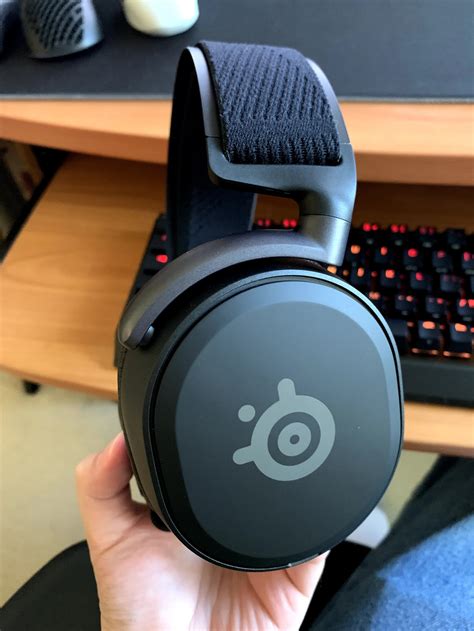
When I first pulled the Arctis Pro Wireless out of the box, the thing that struck me most was how much it didn't look like a gaming headset. I’ve grown tired of the aggressive angles, RGB lighting that I can't even see while wearing them, and cheap plastics that creak when you move your head. This headset felt like a piece of high-end home audio equipment. The aluminum alloy and steel construction felt cool to the touch, and the matte finish didn't immediately pick up every fingerprint from my hand. I opted for the black version, and I was pleased to find it looks professional enough that I’ve actually worn it during serious work-from-home Zoom calls without feeling like a teenager in a basement.
One detail I noticed immediately was the ski goggle suspension band. I was skeptical at first. Would it actually support the weight of a headset that houses two batteries, a Bluetooth chip, and 40mm drivers? After my first five-hour session, I had my answer. By distributing the weight across the top of the head rather than focusing it on a single pressure point, SteelSeries managed to make a relatively heavy headset feel nearly weightless. I’ve had "hot spots" develop on the crown of my head with headsets from other major brands within two hours, but with this suspension system, that simply hasn't happened. It’s one of those design choices that you don't appreciate until you’ve lived with it for a few months.
The Wireless Base Station: The Secret Sauce
In my experience, the real star of the show isn't the headset itself, but the wireless transmitter base station. This little black box is the brain of the operation and the primary reason I can't go back to standard USB dongles. It features an OLED screen that allowed me to bypass software entirely for the first few weeks. I could adjust my EQ settings, check battery life, and most importantly, manage the ChatMix feature without ever alt-tabbing out of a game. This is a godsend for anyone who has ever been in a high-stakes match and needed to drown out a particularly chatty teammate without lowering the game's footstep audio.
The base station also handles the dual-battery charging system. This is a point of genuine appreciation for me. Every wireless headset I’ve owned previously had a common failure point: the charging port. Eventually, the micro-USB or USB-C port gets loose, or the internal battery stops holding a charge, and the headset becomes a paperweight. With the Arctis Pro Wireless, the battery is swappable. While I’m using one battery in the headset, the second is charging inside the base station. When I hear that "beep-beep" indicating low power, I pop the magnetic plate off the ear cup, swap the batteries in about five seconds, and I’m back at 100%. I haven't plugged this headset into a charging cable once in six months. It’s a level of freedom that is hard to overstate.
Audio Quality: Can Wireless Truly Compete?
I’ll be honest: I was prepared to be disappointed by the sound. Wireless audio always involves some level of compression. However, the Arctis Pro Wireless uses high-density neodymium magnets and is rated for a frequency range of 10Hz to 40,000Hz. While my human ears probably can’t hear the upper limits of that range, I noticed that the clarity in the mids and highs was significantly better than the "muddy" sound profiles found in most gaming headsets. There is a crispness to the audio that makes it feel much more like a pair of studio monitor headphones than a gaming peripheral.
I spent a lot of time testing the EQ presets through the base station. I found the "Flat" setting a bit too clinical for my taste, but after a few minutes of tweaking, I found a sweet spot that emphasized sub-bass for cinematic games like Cyberpunk 2077 while keeping the treble sharp enough for directional audio in Valorant. I was surprised by how much detail I could pick up. In tactical shooters, I wasn't just hearing that someone was "to the left"; I could tell if they were on a wooden floor versus a metal grate, and roughly how far away they were. That spatial awareness is what separates a gimmick from a tool, and this is definitely a tool.
One thing that bothered me initially, however, was the slight hiss or "white noise" when no audio was playing. It’s a common issue with high-gain wireless headsets, but for a "Pro" branded device at this price point, I expected a silent floor. I eventually learned to tune it out, and it disappears the moment any audio begins, but if you are sensitive to that faint static sound in a silent room, it’s something you will notice during the first few days of use.
Discover deals on Audio & Headphones — updated daily.
See Deals →Dual Wireless: Life-Changing Multi-Tasking
Another "I didn't know I needed this" feature is the ability to connect via 2.4G lossless wireless to my PC and Bluetooth to my phone simultaneously. I noticed that my workflow changed almost immediately after I started using this. I can listen to my game audio or a podcast on my PC, and if my phone rings, I can answer the call through the headset without stopping what I'm doing. The audio from the PC lowers slightly, allowing me to talk to a delivery driver or take a quick call from my boss while I'm mid-raid. It sounds like a small convenience, but once you have it, every other headset feels restrictive.
What I Found Disappointing
No review would be honest without mentioning the flaws. After several months, I noticed that the "AirWeave" fabric ear cushions, while incredibly breathable, don't provide the best isolation. If you are in a noisy environment—like a shared office or a living room with a loud TV—you are going to hear everything around you. I ended up purchasing a set of leatherette replacement cushions to increase the passive noise cancellation, though this did make my ears a bit sweatier during long sessions. It's a trade-off that SteelSeries should probably address by including both sets in the box given the premium price.
Internal build quality has also been a talking point in the community. I noticed that the hinge where the headband meets the ear cup is made of plastic. While I haven't had any issues yet, I find myself being extra careful when putting them on or taking them off because it feels like a potential stress point. For a headset that costs this much, that specific joint should probably have been reinforced with steel or aluminum.
Pros & Cons
- Pro: The swappable battery system is the best charging solution in the industry. You literally never have to plug the headset in.
- Pro: Exceptional soundstage for a closed-back wireless headset, providing clear directional cues in competitive gaming.
- Pro: Simultaneous Bluetooth and 2.4G wireless allows for incredible flexibility across devices.
- Pro: The Wireless Base Station is intuitive and prevents the need for bloated software installations.
- Con: The hinges are a known weak point and require careful handling to prevent cracking over time.
- Con: Out-of-the-box noise isolation is mediocre due to the breathable fabric ear cups.
- Con: There is a faint audible floor hiss when no audio is playing, which might annoy audiophile purists.
Technical Comparison: Arctis Pro Wireless vs. Competitors
After testing for several months, I wanted to see how the specs stacked up against other common high-end wireless options I've used in the past. In my experience, the numbers only tell half the story, but they are a good starting point for understanding why this headset commands a higher price tag.
| Feature | Arctis Pro Wireless | Typical High-End Competitor | Budget Wireless Headset |
|---|---|---|---|
| Frequency Response | 10 – 40,000 Hz | 20 – 20,000 Hz | 20 – 20,000 Hz |
| Charging Method | Swappable Batteries | USB-C Cable only | Micro-USB Cable only |
| Connectivity | 2.4G + Bluetooth (Simultaneous) | 2.4G (Single Mode) | 2.4G (Single Mode) |
| Interface | OLED Base Station | Software Only | On-headset buttons only |
| Weight | ~360g (Balanced) | ~320g - 400g | ~250g (Cheap plastics) |
A Buying Guide for Potential Owners
If you are considering picking up the Arctis Pro Wireless, you need to ask yourself a few questions about your setup. I’ve found that this headset shines in very specific scenarios, while it might be overkill for others. Here is my honest guide to whether or not you should invest your hard-earned money into this system.
Who is this for?
In my opinion, this is the ultimate headset for the "cross-platform" user. If you spend your day switching between a PC for work, a PlayStation 5 for gaming, and a smartphone for music, the base station acts as a central hub that makes those transitions seamless. I’ve found that the optical-in and line-in ports on the back of the station are incredibly useful for integrating older consoles or even a separate dedicated microphone setup.
It is also for the person who hates cables. If the idea of forgetting to charge your headset and having to play with a 10-foot USB cable dangling from your face fills you with dread, the swappable battery system makes this the only logical choice. In the months I've owned these, I have effectively forgotten that batteries are even a concern.
What to check before you buy?
First, consider your head size. While the ski-goggle strap is comfortable, it does have a limit. I have a medium-sized head, and it fits perfectly. However, I’ve had friends with larger heads try my pair, and they found the clamping force to be a bit tight, even with the strap adjusted to its maximum length. If you typically find "one-size-fits-all" hats to be too small, you might want to try these on in a store before committing.
Find top-rated Audio & Headphones products at great prices.
Shop Amazon →Second, decide if you actually need the "Pro" features. If you don't care about high-fidelity audio and just want something to talk to your friends on Discord, SteelSeries makes more affordable models like the Arctis 7 or 9 that offer similar comfort without the expensive OLED base station and dual-battery system. You are paying a premium for the DAC (Digital-to-Analog Converter) quality and the convenience of the transmitter box.
Long-Term Durability Findings
After several months, I've noticed a few things about how the headset ages. The matte finish on the plastic ear cups is surprisingly resilient to scratches, but the magnetic plates do tend to rattle just a tiny bit if you shake your head vigorously. I also noticed that the retractable microphone, while convenient, has a slight "memory" to the wire. After being bent a certain way for a long time, it takes some effort to get it to sit perfectly straight again. None of these are deal-breakers, but they are the small details you notice after the "honeymoon phase" of a new purchase wears off.
The software side of things, SteelSeries GG, is something I have mixed feelings about. While the base station allows you to avoid the software, you do need it for firmware updates and more advanced features like "Sonar." Sonar is actually quite impressive; it allows for much deeper control over specific frequency bands and includes noise-gate settings for the microphone that help filter out mechanical keyboard clicks. However, the software can feel a bit "bloated" with various marketing tabs and features you might never use. I generally set my preferences once and then disable the software from my startup programs.
The Microphone: Good, Not Great
If there is one area where the Arctis Pro Wireless feels like a "gaming headset" rather than a piece of professional audio gear, it’s the microphone. Don't get me wrong—it's perfectly fine for gaming and Discord calls. My friends told me I sounded clear, and the bidirectional design does a decent job of rejecting noise from the rest of the room. However, compared to a dedicated XLR or even a high-quality USB standalone mic, the audio sounds a bit thin and compressed. It lacks the "warmth" that you’d want for professional podcasting or streaming. If you are a serious content creator, you will likely still want a dedicated microphone. But for the average gamer, I noticed that the convenience of having a retractable, "ClearCast" mic that hides away when you're just listening to music outweighs the slightly average vocal quality.
Conclusion
After taking the plunge and living with the Arctis Pro Wireless for the better part of a year, I can see why it has become a industry standard of sorts. It isn't a perfect headset—the potential hinge fragility and the slight background hiss are reminders that wireless tech still has compromise. But those compromises are dwarfed by the sheer utility of the base station. The ability to swap batteries and keep playing indefinitely, combined with the convenience of simultaneous Bluetooth and a high-fidelity 2.4G connection, creates a user experience that feels genuinely premium.
In my experience, many products in the "gaming" category rely on flash and marketing to justify their price. This headset feels different. It feels like a piece of technology designed by people who actually use headsets for ten hours a day and understand the specific frustrations of the medium. Whether I'm trying to hear the faint click of a grenade pin in a competitive match or just wanting to listen to a high-bitrate album while I do my housework, the Arctis Pro Wireless has managed to handle it all. It’s a rare case where the product actually lives up to the professional branding, provided you treat it with the care a piece of high-end equipment deserves.