The Truth About the Rokid Max 2: Pros, Cons, and Verdict
The landscape of personal entertainment and mobile productivity is undergoing a seismic shift. While laptops have long been the gold standard for getting work done on the go, a new category of "spatial display" wearables is challenging the traditional screen-and-keyboard setup. Leading this charge is the Rokid Max 2, a pair of augmented reality (AR) glasses designed to project a massive, high-definition virtual screen directly in front of the wearer's eyes. Marketed as a bridge between high-end optics and everyday portability, the Rokid Max 2 arrives at a time when consumers are increasingly looking to reclaim their privacy, posture, and screen real estate.
Unlike bulky virtual reality headsets that isolate the user from their environment, the Rokid Max 2 leans into the "Air Glasses" philosophy. It is designed to be lightweight, stylish enough for public use, and simple enough to plug into a wide range of devices via USB-C. But behind the sleek aesthetic and the promise of a theater-sized display lies a complex reality of optical trade-offs, ergonomic challenges, and software dependencies. This article delves deep into the mechanics of the Rokid Max 2, examining whether it truly represents the future of personal computing or if it remains a niche accessory for the tech-obsessed few.
The Evolution of the Wearable Display
To understand the Rokid Max 2, one must first understand the lineage it belongs to. Previous iterations of AR glasses often suffered from "tunnel vision," where the field of view was too narrow to be truly immersive, or from low-resolution panels that made reading text—a critical requirement for laptop users—almost impossible. Rokid has systematically addressed these legacy issues. The Max 2 features micro-OLED panels that provide significant improvements in brightness and color accuracy, aiming to replicate the experience of sitting in the middle of a high-end cinema.
The primary use case for these glasses has shifted from simple media consumption to a more versatile "virtual desktop" environment. As remote work becomes standard, travelers find themselves struggling with the limited 13-inch displays of ultraportable laptops. The Rokid Max 2 offers an alternative: a virtual 300-inch screen that floats in space. For a professional working on a plane, this means being able to view multiple spreadsheets or a timeline of high-resolution video without the physical constraints of a tray table. Furthermore, the privacy aspect cannot be overstated; in a world of "shoulder surfing," having your screen visible only to your own retinas is a significant security advantage.
Detailed Product Analysis: Hardware and Optics
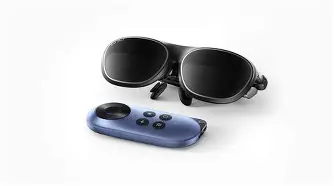
The hardware of the Rokid Max 2 is a study in refined industrial design. The glasses weigh remarkably little, a feat achieved by offloading much of the processing and power requirements to the host device. By using a wired connection, Rokid eliminates the need for heavy internal batteries and heat-generating processors within the frame itself. This allows for a more comfortable "nose-heavy" balance that can be sustained for hours, provided the user finds the right fit with the included nose pads.
Optical Engineering and Visual Quality
At the heart of the Rokid Max 2 are the Sony-manufactured Micro-OLED displays. These panels boast a resolution of 1920x1080 per eye, which, when combined, creates a crisp and vibrant image. The peak brightness is a standout feature, reaching levels that allow the glasses to be used even in well-lit rooms. While the image is technically transparent (allowing the wearer to see the world around them), Rokid also provides a blackout cover for those moments when total immersion is required.
One of the most praised features for laptop users is the diopter adjustment. Recognizing that many people wear prescription glasses, Rokid has integrated a dial system for each eye that can adjust focus from 0.00D down to -6.00D. This eliminates the need for cumbersome lens inserts or wearing the AR glasses over existing spectacles. However, users with high astigmatism may still find that a custom lens insert is necessary for perfect clarity across the entire field of view.
Ergonomics and Comfort
Comfort is the ultimate gatekeeper for wearable technology. The Rokid Max 2 introduces flexible titanium hinges that accommodate various head shapes without applying excessive pressure to the temples. The nose pads are also redesigned to be "air-cushioned," distributing weight more evenly across the bridge of the nose. Despite these improvements, the "cable fatigue" factor remains. Having a USB-C cable running from your head to your laptop or phone is a constant reminder that you are tethered to a machine, and the weight of the cable itself can occasionally tug on the glasses, slightly shifting the optical alignment.
Real-World Use Cases: Beyond the Marketing
In practice, how does the Rokid Max 2 perform for a professional or a student? If you are a coder or an editor, the clarity of text is paramount. When connected to a MacBook or a Windows laptop, the Rokid Max 2 acts as a secondary monitor. Using software like Rokid’s "AR Lite" or third-party spatial desktop apps, users can actually pin multiple windows in space. However, this is where the hardware meets the limitations of current software. Without perfect 6-DOF (Six Degrees of Freedom) tracking, the screens can sometimes feel slightly "floaty" or require frequent centering.
Looking for the best Laptops & Computers deals on Amazon?
View Offers →For gamers, the experience is much more seamless. Connecting a Steam Deck, ASUS ROG Ally, or a PlayStation 5 (via an adapter) transforms the handheld experience into a big-screen event. The 120Hz refresh rate supported by the Rokid Max 2 ensures that fast-paced action remains smooth, with minimal input lag. This makes the glasses an excellent companion for long commutes where the physical ergonomics of holding a handheld console can become tiring.
Pros and Cons
Every piece of technology is a compromise between ambition and the laws of physics. The Rokid Max 2 is no exception. Below is a breakdown of what the device gets right and where it still falls short of the "perfect" AR experience.
- Pro: Exceptional Contrast and Color. The Micro-OLED technology ensures that blacks are truly black and colors are saturated, making it superior to many traditional laptop screens.
- Pro: Integrated Diopter Adjustment. The ability to tune the focus for each eye independently is a game-changer for nearsighted users.
- Pro: High Refresh Rate. Support for up to 120Hz makes it a legitimate choice for competitive gaming.
- Pro: Portability. The glasses fold down like traditional sunglasses and come with a hard-shell carrying case, fitting easily into a laptop bag.
- Pro: Privacy. It is impossible for anyone else to see what you are working on, making it ideal for sensitive tasks in public spaces.
- Con: Edge Blurriness. Depending on the shape of your face and the positioning of the nose pads, the corners of the virtual screen can appear slightly blurry or "cut off."
- Con: Audio Leaks. While the integrated speakers are clear, they are open-ear, meaning people sitting right next to you can hear your audio at higher volumes.
- Con: Power Consumption. Since the glasses draw power from the host device, your smartphone or laptop battery will drain significantly faster during use.
- Con: Ecosystem Fragmentation. Full AR features often require specific apps or hardware like the Rokid Station, which adds to the total cost and complexity.
Technical Specifications Comparison
To put the Rokid Max 2 into perspective, it is helpful to see how its core specifications compare to other leading devices in the "Display AR" category. While various models share similar goals, the nuances in weight, field of view (FOV), and refresh rates define the user experience.
| Feature | Rokid Max 2 | Competitive Model A | Competitive Model B |
|---|---|---|---|
| Display Type | Sony Micro-OLED | Micro-OLED | Standard OLED |
| Resolution | 1920 x 1080 per eye | 1920 x 1080 per eye | 1280 x 720 per eye |
| Max Refresh Rate | 120Hz | 90Hz | 60Hz |
| Field of View | 50 Degrees | 46 Degrees | 40 Degrees |
| Weight | 75g (approx.) | 79g | 85g |
| Diopter Adjustment | 0 to -6.00D | Required Inserts | 0 to -5.00D |
The Buying Guide: Is the Rokid Max 2 Right for You?
Buying a piece of head-worn hardware is a more personal decision than buying a laptop. Before investing, potential buyers should evaluate their primary needs and their existing hardware ecosystem.
Check Compatibility
The Rokid Max 2 requires a USB-C port that supports DisplayPort Alt Mode. Most modern MacBooks, high-end Windows laptops, and flagship Android phones support this. However, many mid-range phones and almost all older iPhones (pre-iPhone 15) require a specialized HDMI-to-USB-C adapter that provides power. If your device doesn't support video output via USB-C, the setup process becomes much more cumbersome and less portable.
Consider Your Environment
If you plan to use these as a replacement for a home theater, they are excellent. If you plan to use them as a "mobile office," consider the ergonomics. Looking at a fixed virtual screen for eight hours a day can lead to neck strain if you aren't careful about your posture. These are best used for focused bursts of 1–2 hours rather than a full 8-hour workday replacement.
Eyesight and Prescription
If you have high myopia (beyond -6.00D) or significant astigmatism, you must factor in the cost of custom prescription inserts. While the built-in diopters are fantastic, they are not a universal solution for all vision impairments. Testing the fit is also vital; if the glasses sit too high or too low on your face, you will fight against chromatic aberration and edge distortion constantly.
The Role of the Rokid Station
For many, the Rokid Max 2 is best paired with the Rokid Station. This is a small, remote-sized Android TV device that powers the glasses, providing a dedicated interface for streaming apps like Netflix, YouTube, and Amazon Prime Video. It offloads the battery drain from your phone and provides a dedicated control set. If you are primarily a media consumer rather than a "pro" user, the Station is almost an essential addition.
Shop the latest Laptops & Computers picks on Amazon.
Shop Amazon →Spatial Computing vs. Simple Screen Mirroring
It is important to distinguish between what the Rokid Max 2 does out of the box and what it can do with dedicated software. By default, plugging the glasses into a laptop simply mirrors your screen. It is a "dumb" monitor on your face. To achieve "Spatial Computing"—where windows stay fixed in the air even when you turn your head—you need software that interprets the IMU (Inertial Measurement Unit) data from the glasses.
Rokid’s software ecosystem is evolving. Their AR applications allow for a browser-based experience where multiple tabs can be arranged in a panoramic view. This is where the 50-degree field of view becomes critical. While it isn't wide enough to fill your entire peripheral vision, it is wide enough to feel like a very large workspace. The "Truth" about the Rokid Max 2 is that the hardware is currently a step ahead of the software. The optics are ready for prime time, but the operating systems we use (Windows and macOS) are still catching up to the idea of a display that moves with the user's head.
Maintenance and Longevity
Since the Rokid Max 2 is an optical device, it requires more care than a standard laptop. The lenses are prone to fingerprint smudges and dust, which can significantly degrade the perceived image quality. Because the displays are so close to your eyes, even a tiny speck of dust can look like a giant blotch on your virtual screen. Rokid includes a high-quality microfiber cloth, and regular cleaning is mandatory.
Furthermore, because the cable is non-removable on the glasses' end in some versions, or uses a proprietary connection in others, protecting the cable is essential. Frequent bending at the connector can lead to signal loss over time. Users should treat these glasses with the same level of care they would give to a high-end camera lens or a pair of luxury sunglasses.
Final Verdict: A specialized Tool for the Modern Nomad
The Rokid Max 2 is a remarkable piece of engineering that delivers on its core promise: a high-quality, massive display that fits in a pocket. It successfully addresses the most painful aspects of previous AR generations by improving brightness, reducing weight, and integrating diopter adjustments. For the frequent traveler, the privacy-conscious professional, or the handheld gamer, it offers a level of immersion and utility that a 13-inch laptop screen simply cannot match.
However, it is not a perfect replacement for a traditional monitor setup. The limitations in field of view, the inevitable edge blurriness for certain face shapes, and the reliance on a wired connection mean it remains a secondary tool rather than a primary one. It is a "specialty" device that excels in specific contexts—planes, trains, hotels, and small apartments. Throughout the testing and analysis, it becomes clear that the Rokid Max 2 is currently the best version of this specific vision of the future. It doesn't try to be a fully independent computer like the Apple Vision Pro; instead, it settles for being the best possible screen for the devices you already own.
Ultimately, the "Truth" about the Rokid Max 2 is that it is a bridge. It bridges the gap between current mobile hardware and the spatial computing future we are moving toward. If you understand the optical limitations and have a compatible device, the Rokid Max 2 provides a viewing experience that feels truly magical. It is an investment in a new way of interacting with data and media, provided you are willing to deal with the occasional tether and the learning curve of spatial ergonomics.