Odyssey G5 G51C S27Cg51 First Look: Unboxing and Impressions
The Odyssey G5 G51C S27Cg51 is positioned as an accessible entry in Samsung’s curved gaming lineup. This first-look article walks through the unboxing experience, evaluates the monitor’s design and core performance, and considers real-world use cases so buyers can weigh whether it fits their needs. The tone is editorial and objective, weighing strengths and compromises in the context of gaming, content consumption, and productivity.
Introduction
Curved monitors have shifted from niche novelty to mainstream option, and the Odyssey G5 family aims to bring immersive curvature and gamer-focused features to a wider audience. Models with names like G51C or S27Cg51 typically denote a 27-inch class screen with Samsung’s aggressive curvature and VA-based display characteristics. This first look covers what buyers can expect on day one — packaging, physical setup, out-of-box image, and initial impressions during gaming and desktop use.
Unboxing and First Impressions
Packaging and what's in the box
The Odyssey G5 typically arrives in a sturdy retail carton with protective foam and a plastic sleeve around the panel. Included items are the monitor panel, a detachable stand and base, a power cable, and documentation. In many regions a DisplayPort or HDMI cable is included; the exact cable bundle can vary by market. For those planning to use high refresh rates or adaptive sync, a DisplayPort cable is recommended if available.
Build quality and assembly
Assembly is straightforward: the stand slides into the monitor’s V-shaped base and secures with a few screws or a snap mechanism depending on the unit. The chassis leans into a gamer aesthetic with matte plastics and a subtle rear accent. The overall fit and finish feel commensurate with a mid-range gaming monitor — solid enough for daily use but not as premium-feeling as higher-end models that use metal accents or heavier-duty stands.
One early note: this monitor often offers VESA mounting holes, which is useful for buyers who prefer a monitor arm for desk flexibility. The factory stand typically supplies tilt and some height adjustment (check the specific SKU), but rotation and deep ergonomic articulation may be limited.
Display and Image Quality
Panel type and curvature
Samsung’s Odyssey G5 series uses a VA (Vertical Alignment) panel which delivers deep native contrast and strong blacks compared with most IPS-based competitors. The pronounced curvature — commonly a 1000R radius on these models — is designed to match the human field of view and increase immersion, particularly in single-player games and cinematic content.
The curvature enhances the feeling of depth and can make large desktop spans feel more comfortable, but it also changes viewing characteristics: head position matters more than on a flat panel, and color/brightness can shift if viewed from extreme off-center angles. For users who sit directly in front of the display, the curve adds to immersion without being distracting.
Shop the latest Electronics picks on Amazon.
Browse Now →Resolution and perceived sharpness
Depending on the exact SKU, a 27-inch Odyssey G5 can be offered at Full HD or WQHD resolution. WQHD (2560 × 1440) on a 27-inch screen is a very common and well-balanced option — it increases pixel density for noticeably sharper images and is a preferred choice for users who want a mix of gaming performance and desktop workspace. The increase in pixel count compared with Full HD is particularly helpful for productivity tasks where extra screen real estate matters.
Color, contrast, and HDR
VA panels typically exhibit strong contrast ratios that make dark scenes pop and create a more cinematic look. Out of the box, the Odyssey G5 usually delivers punchy colors but not the most accurate colorimetry for professional photo or video editing. It supports HDR10 in many SKUs, but like many mid-range monitors the HDR experience is limited by modest peak brightness and the lack of local dimming zones. In practical terms, HDR adds some visual richness for games and movies, but it won’t match high-end HDR displays that combine high peak luminance with local dimming.
Performance: Gaming and Responsiveness
Refresh rate and motion handling
Odyssey G5 monitors often advertise high refresh rates — commonly 144Hz or higher on certain variants — paired with fast response-time modes. High refresh rates materially improve the smoothness of motion in competitive shooters and fast-action games, and they help reduce perceived input lag when paired with a capable GPU. VA pixel response can be slightly slower than IPS in some transitions, so Samsung implements overdrive and motion-enhancement features to minimize ghosting. Performance here is generally very good for most gamers, though extreme, pixel-perfect motion scenarios may reveal some trailing compared with premium fast-VA or IPS gaming panels.
Adaptive sync and compatibility
The Odyssey G5 typically supports adaptive sync technologies (FreeSync, and is often G-SYNC Compatible), which prevents screen tearing by synchronizing the GPU’s frame output with the monitor’s refresh rate. This improves perceived smoothness and is essential for systems that don’t consistently hit steady frame rates. The combination of high refresh and adaptive sync makes this monitor attractive to PC gamers using modern graphics cards.
Input lag and competitive play
Measured input lag on these monitors tends to be low enough for mainstream and casual competitive play. Professional esports players often demand sub-10ms system latency and specialized features beyond what a mid-range curved monitor offers. For most players, the Odyssey G5 provides responsive performance that makes it easy to aim and react in fast games.
Real-World Use Cases
Different buyers will look at the Odyssey G5 through different lenses. Here are typical scenarios where the monitor shines or shows its trade-offs:
- Cinematic single-player gaming: The curve and strong contrast make narrative-driven games and single-player titles feel immersive and visually engaging.
- Competitive gaming: High refresh rate and adaptive sync are attractive, but highly competitive players may prefer flat, ultra-fast IPS panels with slightly better pixel response.
- Productivity and multitasking: With WQHD resolution, a 27-inch panel provides a comfortable balance between usable desktop space and readable UI scaling — good for developers, office workers, and students.
- Content creation: VA panels are decent for color-graded workflows when paired with calibration, but professionals needing precise color accuracy and wide color gamut may opt for high-end IPS or dedicated reference monitors.
- Home entertainment: TV and movie watching benefit from the contrast and curvature; however, HDR content will look better on brighter, local-dimming displays.
Connectivity and Ergonomics
Typical connectivity includes one or more HDMI ports and a DisplayPort input, plus a power connection. USB hubs are uncommon on this tier, so users relying on many peripherals should plan for an external dock or powered hub. The stand provides basic ergonomic adjustments; VESA compatibility allows mounting to third-party arms for greater flexibility. Cable routing features are often included on the stand to keep the desk tidy.
Looking for the best Electronics deals on Amazon?
View Offers →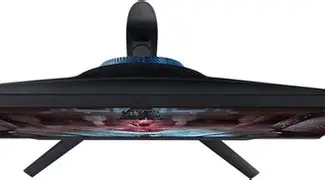
Calibration and Out-of-Box Accuracy
Out-of-box color tends to be tuned for vibrant, gaming-friendly visuals rather than studio-level accuracy. A quick calibration using software and a colorimeter will improve accuracy for those who need it. Gamers and general users usually find the factory profile pleasing. Brightness and color uniformity are acceptable, but extreme uniformity expectations should be tempered; mid-range VA panels can show slight luminance variation toward the edges.
Pros & Cons
- Pros
- Immersive curvature that enhances single-player and cinematic experiences
- Strong native contrast from the VA panel for deep blacks
- High refresh rate and adaptive sync for smooth gaming
- Good value proposition for players who want immersion without flagship prices
- Cons
- Curved VA viewing angles can be less forgiving for multi-user desks
- HDR support is limited by peak brightness and the absence of local dimming
- Stand ergonomics may be basic depending on SKU
- Color accuracy out of the box is adequate but not reference-grade
Comparison
The following table compares the Odyssey G5 family approach to two common alternatives buyers consider: a higher-end curved Odyssey G7 and a flat 27-inch 1440p IPS gaming monitor. This is a high-level comparison intended to highlight trade-offs rather than enumerate exact SKU-by-SKU specs.
| Model | Panel Type | Curvature | Typical Refresh Rate | Strengths |
|---|---|---|---|---|
| Odyssey G5 (G51C / S27Cg51) | VA | Pronounced curve (e.g., 1000R) | 144Hz (common) | Deep contrast, immersive curve, strong value |
| Odyssey G7 | QLED / fast VA | Pronounced curve (1000R) | 240Hz (on some SKUs) | Higher refresh, wider gamut, brighter HDR potential |
| Flat 27" 1440p IPS | IPS | Flat | 144Hz | Better viewing angles and color consistency; good for creators |
Buying Guide: Who Should Consider the Odyssey G5?
Choosing a monitor requires matching features to priorities. The Odyssey G5 suits certain buyer profiles particularly well; here are the key considerations to decide if it’s the right choice.
Consider this monitor if:
- Immersion matters: Players who prioritize cinematic immersion in single-player games and want a curved field-of-view will appreciate the 1000R-style curvature.
- Budget-conscious gamers: Those seeking a high-contrast VA experience and solid gaming performance without the premium price of flagship OLED or high-end QLED monitors.
- Mixed use: Users who balance gaming with general productivity and want a comfortable 27-inch workspace.
Look elsewhere if:
- Color-critical work: Professionals in photo, print, or film who require color accuracy and wide color gamut coverage should consider higher-end IPS or professional reference monitors.
- Esports-level competitive play: If every millisecond of competitive advantage matters, there are flatter, ultra-fast IPS displays with marginally faster pixel response that might be preferable.
- HDR fidelity is a priority: Buyers seeking true HDR performance with deep highlights and local dimming will need to step up to displays with higher peak brightness and zone-based backlighting.
Practical tips before purchase
- Verify the exact resolution of the SKU being sold in your region (FHD vs WQHD) and confirm your GPU can drive your desired frame rates at that resolution.
- Plan for cables: if you want to run high refresh rates and adaptive sync, ensure a DisplayPort cable is available or bundled.
- Check the stand’s ergonomics and VESA support if mounting or extensive adjustment is important.
- Factor in desk depth: pronounced curvature and larger monitors require sufficient distance for comfortable viewing.
Final Thoughts and Conclusion
The Odyssey G5 G51C S27Cg51 (27-inch curved variants) is a compelling option for gamers and general users who want an immersive screen with strong native contrast and a high refresh cadence without stepping into flagship price territory. Its curvature and VA panel deliver a cinematic aesthetic that enhances single-player titles and movie watching, while adaptive sync and high refresh rates keep competitive play smooth for most users.
Trade-offs come in the form of limited HDR impact, potential viewing-angle constraints typical of VA panels, and stand ergonomics that may not match higher-end displays. For buyers who prioritize deep blacks and a curved viewing experience — especially at a value-oriented price point — the Odyssey G5 is worth considering. Those who need calibrated color or the absolute lowest motion blur should evaluate alternatives, but for the majority of mainstream gamers and desktop users, this model balances immersion, performance, and cost effectively.