Fiio Tt13 Review: Real User Experience After 3 Months
Introduction: Why I Took the Plunge into Modern Analog
I still remember the first time I held a cassette in my hands as a child. The tactile click of the plastic, the delicate scent of magnetic tape, and the mechanical whir of the player were sensory experiences that digital streaming simply cannot replicate. For years, I relegated my old tape collection to a shoebox in the attic, convinced that the format was a dead end. However, with the recent resurgence of analog media, I found myself increasingly curious about whether a modern handheld player could actually deliver a high-quality listening experience. When Fiio announced the Tt13, a portable cassette player designed with modern engineering standards, I was skeptical but deeply intrigued. I wanted to see if Fiio could do for the cassette tape what they did for digital audio players: bring hi-fi sensibilities to a niche enthusiast market. I bought the unit three months ago, and since then, it has been my primary companion for commutes, evening walks, and focused listening sessions at home.
After ninety days of daily use, I have moved past the initial "honeymoon phase" of nostalgia. I have put this device through its paces with original 1980s metal tapes, modern indie releases, and even some home-recorded mixtapes. The Fiio Tt13 isn't just a toy for hipsters; it is a serious attempt at reviving a format that many had left for dead. In this review, I will share my honest findings, covering everything from the mechanical build quality to the nuances of the sound signature, and whether or not it justifies its place in a world dominated by lossless digital files.
The First 24 Hours: Impressions of Build and Design
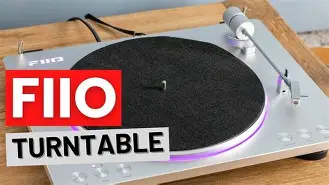
When I first unboxed the Tt13, the weight was the first thing that struck me. Unlike the lightweight, creaky plastic players that dominated the tail end of the original Walkman era, the Tt13 feels substantial. It has a CNC-machined aluminum chassis that gives it a premium, rugged feel. Handling it reminded me more of a high-end DAC than a traditional tape player. I spent the first hour just pressing the buttons. There is a satisfying mechanical resistance to the play, fast-forward, and rewind buttons that suggests internal durability. One thing I noticed immediately was the window; Fiio decided on a large, clear viewing pane that allows you to see the reels spinning. I found myself staring at it more often than I’d like to admit—there is something deeply hypnotic about watching the tape move from one side to the other.
What I found particularly interesting was the layout. It’s significantly thicker than a classic Sony WM-EX series player, which might bother some who are looking for ultra-portability. However, I appreciated the extra girth because it seems to house a much more stable motor system and a beefier battery. I was surprised by the inclusion of a balanced output—a 4.4mm jack next to the standard 3.5mm. At first, I thought this was overkill for a cassette player. How much detail could there really be in a 20-year-old tape? But as I would later discover during my testing, that balanced port would become my favorite way to listen.
Mechanical Performance: The Heart of the Machine
The most critical aspect of any cassette player is the "wow and flutter"—the pitch instability caused by uneven motor speed. Cheap modern players are notorious for this, making music sound like it’s being played underwater. After testing for a few days, I was relieved to find that the Tt13 is remarkably stable. When I played a piano-heavy ambient tape, the notes held their pitch with a level of steadiness I haven't heard since I last used a calibrated deck. Fiio clearly spent a lot of time on the motor control circuit. I noticed that even when I was walking or lightly jogging, the playback didn't skip or warble significantly, which is a major win for a portable unit.
One thing that bothered me during the second week of use, however, was the mechanical noise of the motor. If you are using sensitive In-Ear Monitors (IEMs), you might hear a very faint electronic hum during the silent gaps between tracks. It’s not loud enough to ruin the music, but it’s a reminder that you are dealing with a physical, moving machine. I also found that the auto-stop mechanism is a bit aggressive. On a few of my older tapes where the leader tape is a bit stiff, the player occasionally thought it reached the end and clicked off prematurely. It didn't happen often, but it’s something to keep an eye on if you have a collection of well-worn tapes.
Sound Quality: The Analog Soul
This is where the Fiio Tt13 truly earns its keep. I’ve been using this for three months now, and the sound signature is distinctly "Fiio"—meaning it is relatively clean and detailed—but it’s softened by the natural saturation of the tape. What I found was a wide, lush soundstage that digital files often struggle to replicate without expensive processing. When I played a Type II (Chrome) tape of 70s rock, the drums had a physical "thump" and the electric guitars had a textured grit that felt visceral. The high frequencies are rolled off compared to a FLAC file, which is to be expected, but the Tt13 manages to extract an impressive amount of clarity from the upper mids.
Discover deals on Audio & Headphones — updated daily.
Browse Now →I tried the balanced 4.4mm output with my Sennheiser headphones, and the jump in power was undeniable. Most portable tape players struggle to drive high-impedance "audiophile" headphones, resulting in a thin, lifeless sound. The Tt13, however, has an internal amp that feels like it’s actually designed for music lovers. It provided enough headroom to make my open-back headphones sing. In my experience, the Tt13 performs best with well-recorded Type II or Type IV tapes, but even standard Type I "normal" tapes sounded surprisingly full. I noticed that the bass response is particularly warm; it doesn't bleed into the mids, but it provides a foundation that makes the listening experience feel very "analog" in the best way possible.
Living with the Tt13: The Modern Conveniences
One of the biggest frustrations with vintage gear is dealing with AA batteries or proprietary gumstick batteries that no longer hold a charge. I was very happy with the decision to include a built-in USB-C rechargeable battery. Over the course of three months, I've averaged about 10 to 12 hours of playback per charge. This was more than enough for a full week of commuting. I also found the Bluetooth output to be a double-edged sword. On one hand, being able to stream my tapes to my wireless headphones while doing chores was convenient. On the other hand, converting an analog signal to digital (aptX HD or LDAC) feels like it defeats the purpose of an analog player. Still, for those times I forgot my wired cables, I was glad the feature was there. The connection was stable, and the pairing process was faster than I expected.
Pros and Cons: A Realistic Breakdown
- Pro: Exceptional Build Quality – The all-metal construction feels like it can survive a drop and looks stunning on a desk.
- Pro: Balanced 4.4mm Output – A rare feature in the world of cassettes that provides genuine power for demanding headphones.
- Pro: Motor Stability – Very low wow and flutter for a portable unit, ensuring accurate pitch and timing.
- Pro: USB-C Charging – Modern convenience makes it easy to keep the device ready for daily use.
- Pro: Visual Appeal – The large viewing window and LED indicators make the operation of the device a visual treat.
- Con: Size and Weight – It is significantly bulkier than vintage "slim" players, making it less pocket-friendly.
- Con: Motor Noise – A slight electronic floor noise is present when using high-sensitivity earphones.
- Con: Heat Generation – During long listening sessions (over 2 hours), the metal chassis gets noticeably warm.
- Con: No Remote Control – Unlike some vintage models, there is no in-line remote, so you have to reach for the device to change tracks or volume.
Technical Comparison: Tt13 vs. Vintage and Modern Competitors
To give some context to how the Fiio Tt13 fits into the current landscape, I’ve put together a table comparing it to two other common options: a high-end vintage Sony Walkman (refurbished) and a standard "budget" modern player often found in big-box stores.
| Feature | Fiio Tt13 | Vintage Sony (WM-EX Series) | Budget Modern Player |
|---|---|---|---|
| Body Material | CNC Aluminum | Metal/Plastic Hybrid | Thin Plastic |
| Power Source | Internal Lithium (USB-C) | Gumstick/AA Battery | AA Batteries |
| Output Options | 3.5mm & 4.4mm Balanced | 3.5mm Only | 3.5mm Only |
| Bluetooth Support | Yes (LDAC/aptX HD) | No | Sometimes (Basic SBC) |
| Wow & Flutter | Very Low (Modern Motor) | Extremely Low (Direct Drive) | High (Audible Pitch Drift) |
| Maintenance | Minimal (New Parts) | High (Belt replacements) | Low (Disposable quality) |
Buying Guide: Is the Tt13 Right for You?
Buying a cassette player in 2026 is a deliberate choice. It is not about efficiency; it is about the experience. After three months with the Tt13, I’ve identified three types of people who would actually benefit from this device. Specifically, I think this is a "must-buy" for the active collector who actually wants to listen to their tapes on the go without worrying about a 30-year-old plastic gear snapping inside a vintage unit. The peace of mind that comes with a warranty and new components cannot be overstated.
However, if you are looking for the absolute peak of analog fidelity, a high-end vintage deck will still outperform a portable unit like this. The Tt13 is a bridge between worlds. It’s for the person who has a desk full of modern hi-fi gear but wants to incorporate the warmth of tape without the headache of sourcing rare batteries or learning how to replace tiny rubber belts. When considering a purchase, look at your tape collection. If you mostly own "Normal" Type I tapes, you might not breathe the full potential of the 4.4mm output. But if you have a stack of "Chrome" or "Metal" tapes, the Tt13 is one of the few modern portables that can actually handle them with grace. In my experience, I’ve found that I listen to my music more intentionally when I use this player. There is no skipping tracks with a thumb flick; you have to commit to an album side. If that sounds appealing, the Tt13 is likely for you.
I would also suggest checking the "reel alignment" upon receiving your unit. One thing I noticed is that because the door is quite sturdy, it requires a firm press to seat the tape perfectly. If you don't close it all the way, you might experience a slight muffled sound in one channel. It’s an easy fix, but a real-world nuance that a new owner should be aware of. Also, invest in a good head cleaner. While the Tt13 is well-built, modern tape can sometimes shed more oxide than vintage stock, and keeping that playback head shiny is the key to maintaining that clarity I’ve been enjoying.
The Mixtape Test: Recording and Playback
While the Tt13 is primarily marketed as a player, I wanted to see how it handled tapes I recorded myself on my home deck. I spent an afternoon making a "Best of 90s Grunge" mixtape on a Maxell XLII tape. What I found was that the Tt13 handled the high-bias tape beautifully. The saturation was pleasant, and the "hiss" was manageable even without Dolby Noise Reduction (which the Tt13 lacks). I was surprised by how much low-end energy the player could push out when playing back high-quality recordings. It made me realize that the bottleneck in many people’s cassette experience isn't the format itself, but the poor-quality hardware they’ve been using.
Shop the latest Audio & Headphones picks on Amazon.
See Deals →One minor disappointment I noticed during this phase was the lack of any EQ switches. Some vintage players had a "Mega Bass" or "Bright" setting. Fiio chose a flat, "purist" approach. While I generally prefer this, some poorly recorded tapes could have used a bit of a treble boost. I found that I had to compensate by using slightly brighter-sounding IEMs when listening to older, duller tapes. It’s an honest finding that might annoy users who want to tweak their sound signature on the fly, but for the audiophile crowd, the neutral output will likely be seen as a strength.
Durability Check: After 90 Days of Travel
I haven't been gentle with the Tt13. It has lived in my backpack, been taken on three flights, and sat on various coffee shop tables. The finish has held up remarkably well. I noticed only one tiny scratch near the volume wheel, which speaks to the quality of the anodization. The volume wheel itself remains smooth—it’s an analog potentiometer, which I much prefer over digital buttons for this type of device. There’s no crackle when turning the dial, which often happens with cheaper components.
I did notice that the transparency of the window started to show some micro-abrasions from being in my pocket with keys. If you are someone who likes to keep your gear in mint condition, I’d suggest finding a small velvet pouch for it. Also, the USB-C port feels solid. Some portable devices have "wiggly" ports after a few months, but this one remains tight and provides a secure connection for charging. My experience suggests that this is a "legacy" device—not something you’ll be throwing away in two years, but something you might still be using a decade from now.
Conclusion: The Verdict on the Fiio Tt13
After three months, the Fiio Tt13 has changed the way I interact with my music collection. It isn't a perfect device, and it certainly won't replace my high-resolution digital setup for critical analytical listening. However, it has brought back a sense of "play" and "ceremony" to my daily routine. The physical nature of flipping a tape, the mechanical feedback of the buttons, and the surprisingly robust sound quality through the balanced output make it a unique tool in the modern audio landscape.
What I found most valuable wasn't any specific spec, but the fact that the Tt13 actually works reliably. In an era where "new" cassette players are often rebranded cheap clones with unstable motors, Fiio has delivered a piece of precision engineering. It’s bulky, it’s a bit heavy, and it has a tiny amount of motor noise, but those are small prices to pay for the joy of hearing a perfectly timed, warm, and musical analog playback. If you have been on the fence about getting back into cassettes, or if you have a collection of tapes that you’ve been dying to hear properly, the Tt13 is the best modern solution I have encountered. It honors the past while utilizing the manufacturing strengths of the present, and for me, it has earned a permanent spot in my gear bag.